Scientific paper:
- The benefit of multiple angle observations for visible band remote sensing using night lights.
Full Article
ESSOAR preprint
Sign up for the Astronomy Enthusiasts newsletter!
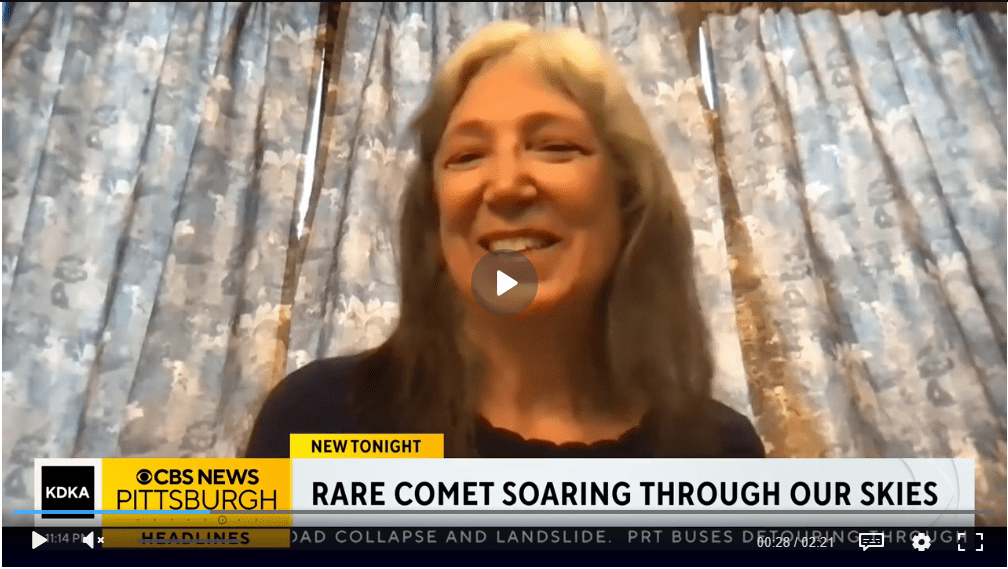
KDKA
Pittsburgh may get a chance to see an ancient comet this month
by Jessica Guay
Oct 12, 2024
Turnshek said the ancient comet may never come back. “It may just get ejected from the solar system,” she said. “People in the Southern Hemisphere got a chance to see it, but now is our chance to get to see it after sunset. So many things in the sky are exciting. But there haven’t been that many great comets in recent history,” Turnshek added.
The Tartan
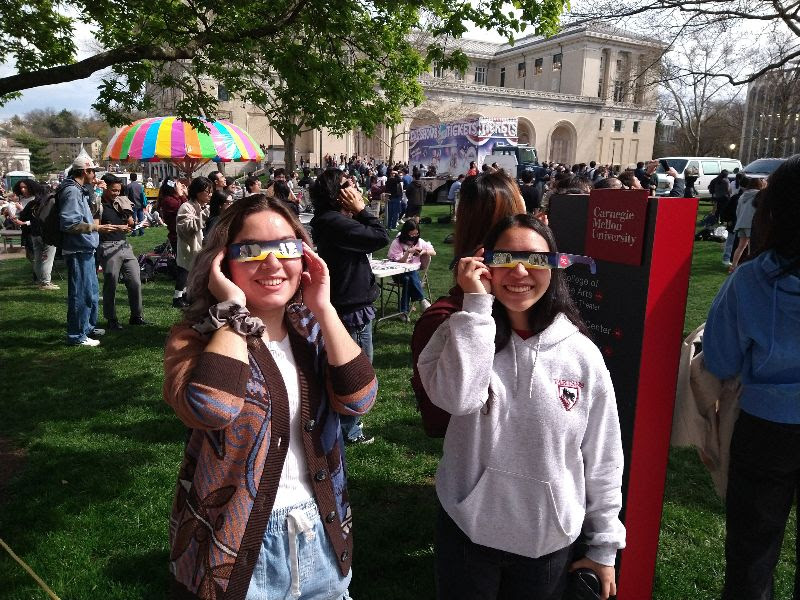
Thousands gather outdoors to witness rare solar eclipse.
by Sam Bates and Arden Ryan
April 15, 2024
“Many viewers wore eye protection thanks to the CMU Women in Science (WiS). The club handed out free eclipse glasses to students. WiS vice president Jessica Wei told The Tartan that the club began distributing glasses after special lecturer Diane Turnshek reached out to them asking if they could act as hosts.”

Carnegie Mellon University News
Carnegie Mellon Prepares for Eclipse
by Kirsten Heuring
April 3, 2024
“Students across the greater Pittsburgh region are learning eclipse science and safety thanks to Turnshek”

The Carnegie Magazine, Spring 2024 edition
Ready for Some Shade?
Carnegie Science Center prepares for the Great American Eclipse this April.
by Julie Silverman
Spring 2024
“Things look eerie,” adds Turnshek. “It’s not the usual cloud moving in front of the sun.”
CMU MCS News
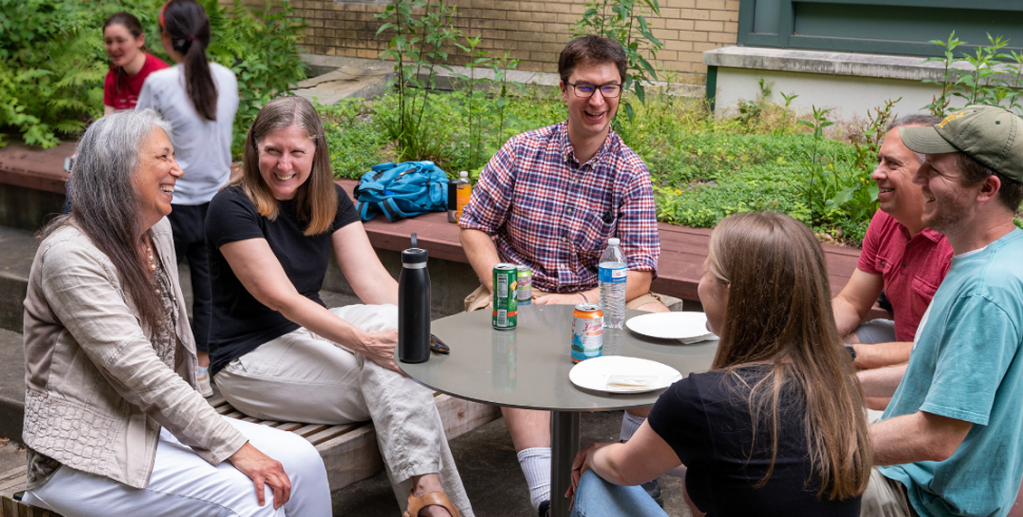
The Multiplier Effect.
Physics faculty provide high school teacher training.
by Heidi Opdyke
July 05, 2023
CMU News
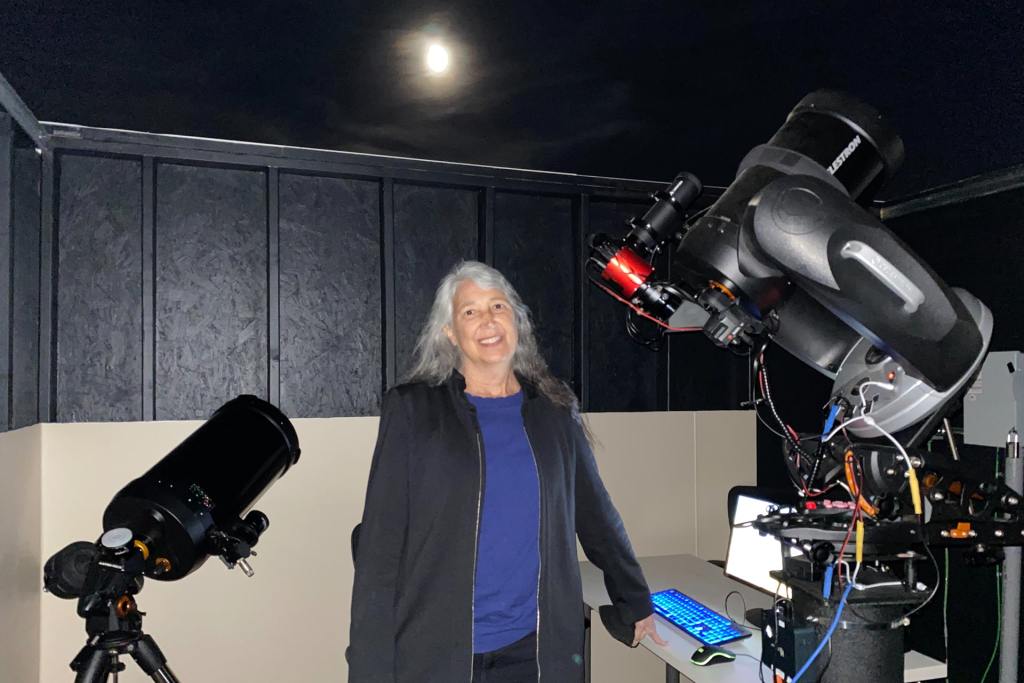
Observatory Creates Out-of-This-World Opportunities for Veterans.
by Heidi Opdyke
Nov 9, 2022

Trib Live
Unique observatory in O’Hara opens galaxy of opportunity.
by Tawnya Panizzi
Oct 18, 2022

2022 Carnegie Science Awards announced.
Diane Turnshek received an honorable mention for Most Inspiring Educator Award.
Oct 13, 2022
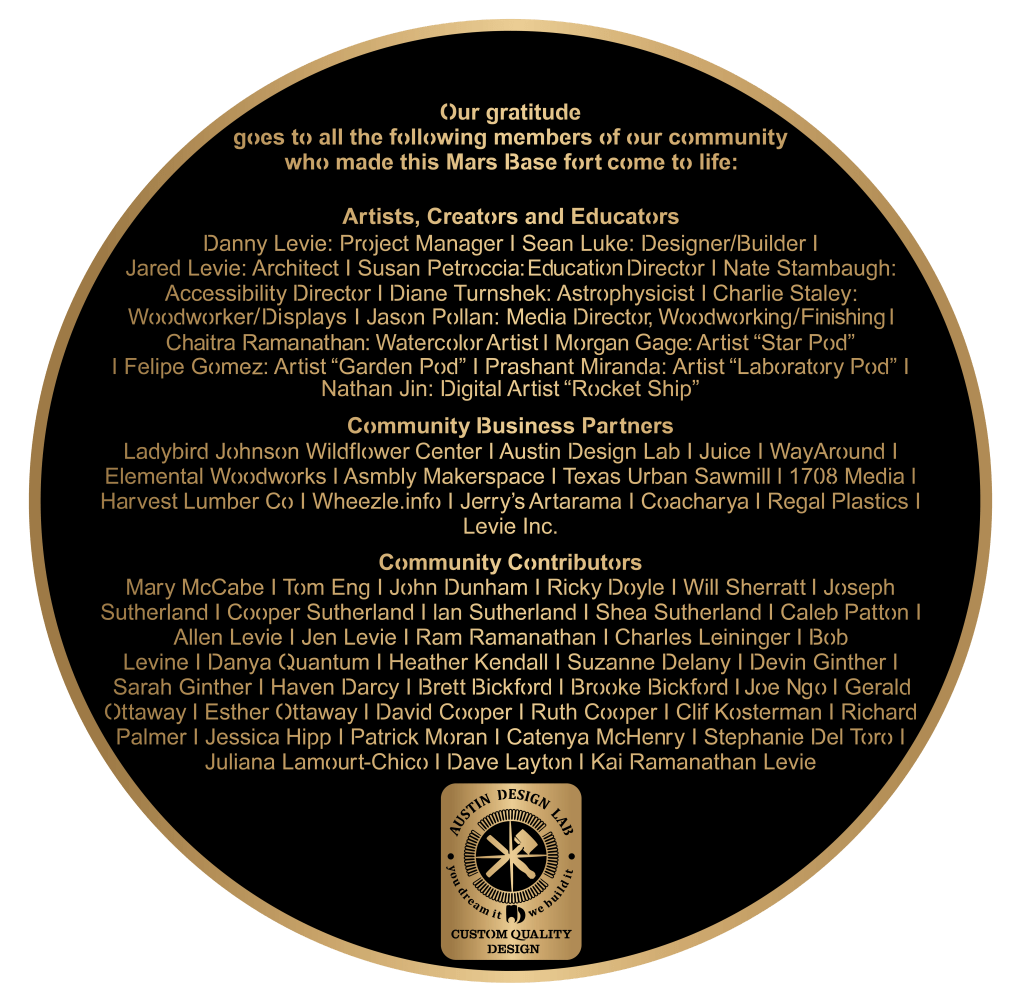
Diane advised on a Mars Base playground at the Lady Bird Johnson Wildflower Center in Austin, Texas.
The Fortlandia Contest winning entry was built by Austin Design Lab.
WESA, 90.5 FM: The Confluence
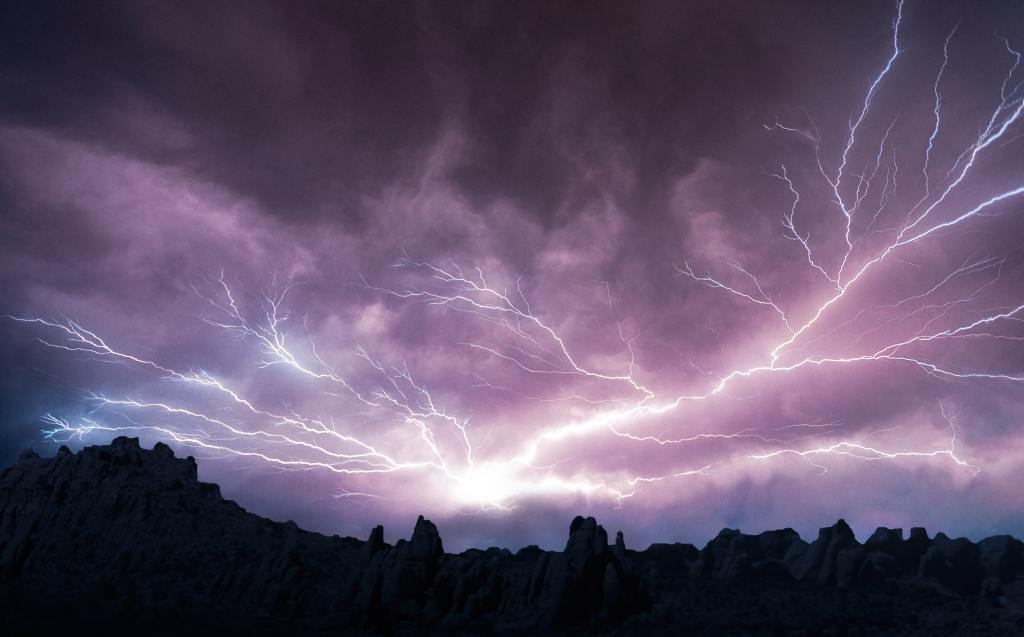
Has lightning ever struck a meteor?
“and, for our Good Question, Kid! Series, we ask a physicist if it’s possible for a meteor to be struck by lightning.”
With Marylee Williams
Jan 26, 2022
Read more (17:23 – 22:30)
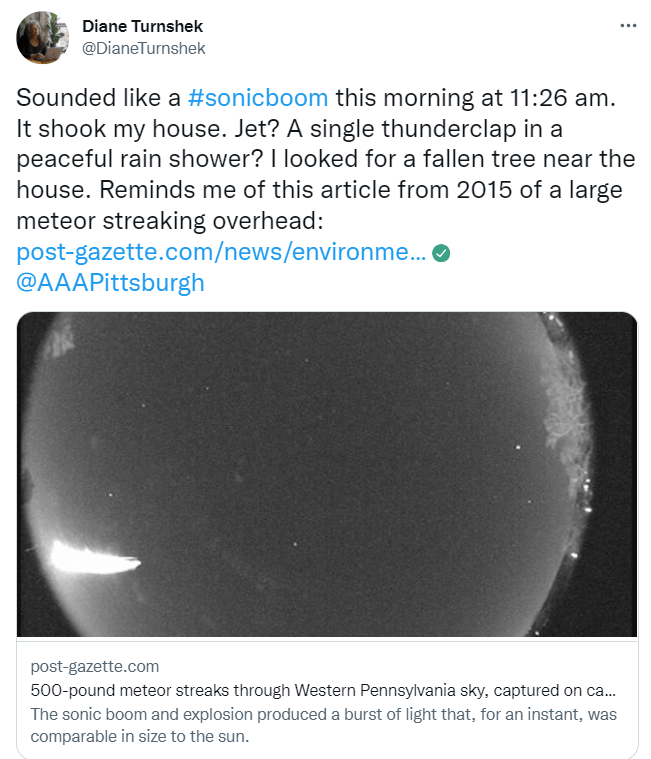
Meteor Blamed For Loud Boom Over Pittsburgh: “It Sounded Like A House Was Exploding“
Diane Turnshek, an astronomer who lectures at Carnegie Mellon University, said she thought her dryer had fallen off the washing machine.
by Douglas Charles
Jan 3, 2022

New York Times: Did a Meteor Explode Over Pittsburgh?
A meteor likely either “exploded or vaporized” over the city on Saturday, a meteorologist said, setting off a strong vibration that one resident likened to a “shock wave.”
by Azi Paybarah
Jan 2, 2022
LOOKING UP
An Astronomy Journey.
Diane talks about her experiences as an educator and advice for students during “Take Our Children to Work Day.”
April 21, 2021
🡠 Click on image to watch video
The CMU Physics Concepts Program . . .
brings students from the Pittsburgh Public Schools to the university to meet with undergraduate mentors who teach fundamental physics concepts and help them create science fair projects during the fall semester. The high school students present their projects at the Pennsylvania Junior Academy of Sciences science fair in February, and attend lectures on physics concepts given by CMU faculty during the spring semester. The program was founded in 1998 by Professor Leonard Kisslinger. Diane facilitates and supplies the equipment for the program.
Dec 9, 2019
🡠 Click on image to watch video

CMU News
Student Team Takes Top Prize in HP, Intel Design Challenge.
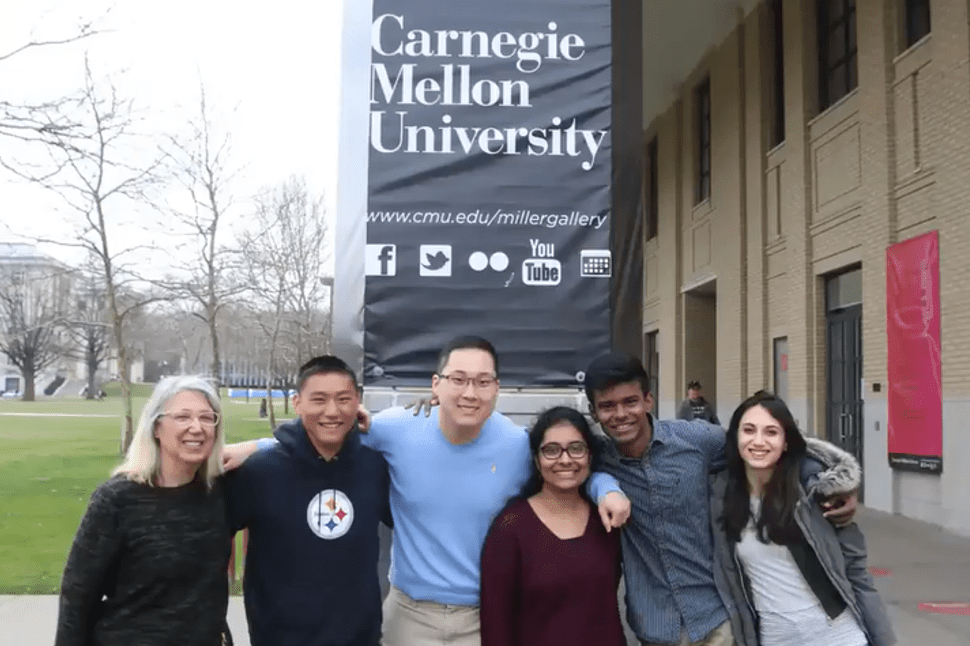
HP and Intel invited eight of the best engineering schools in the United States to assemble teams and design a product that would make life better for astronauts. CMU’s team consisted of five students from Mechanical Engineering, Biomedical Engineering and the School of Architecture, with Diane Turnshek of the Physics Department serving as faculty adviser.
by Kelly Saavendra
April 12, 2017
Global Citizen
These 5 College Students Invented a New Astronaut Suit.
When pondering the challenge of how to make astronauts’ lives better on the International Space Station (ISS), the winners of the “Life in Space” Challenge went back to basics.
May 5, 2017

The Space Show with Dr. David Livingston Broadcast 2856: Hotel Mars.
John Batchelor and I welcomed Diane Turnshek to the program to discuss the innovative Mars City Design Program.
Feb 1, 2017
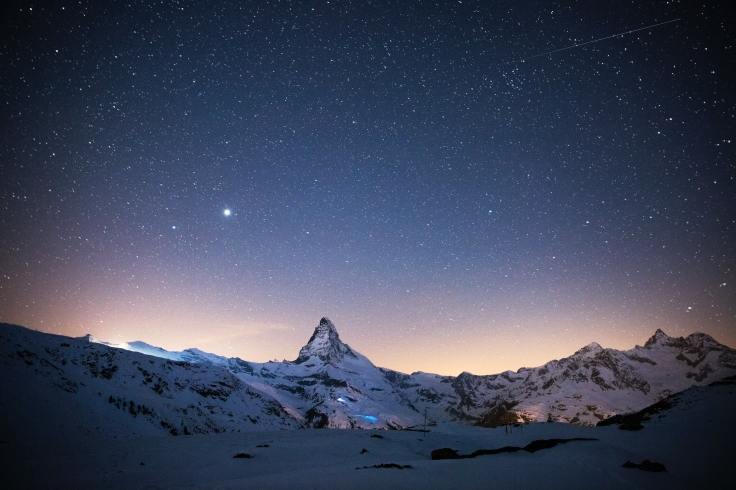
The Washington Post: Ever wondered about the best time for stargazing?
Have you ever noticed that the stars sometimes appear brighter in December, January and February? There’s a link between cold air and the night lights. Winter is an excellent time to see them twinkle, explains astronomer Diane Turnshek.
(Democracy Dies in Darkness)
by Jason Bittel
Nov 16, 2020

Photo by Eric Felack, Trib Total Media
Trib Live: CMU astronomer lectures to Highlands students about space in pilot program
Carnegie Mellon University lecturer Diane Turnshek had a message for Highlands High School students who might want to find life outside of Earth.
by R.A. Monti
April 24, 2015

KDKA News: Group Gathers on Mt. Washington for Lunar Eclipse
“About a dozen people gathered on Mount Washington early Wednesday morning to watch a full lunar eclipse.
Diane Turnshek is an astronomer at Carnegie Mellon University and also teaches at Pitt. She says it’s not necessarily uncommon.”
by Christine D’Antonio
Oct 8, 2014
CMU, The Piper
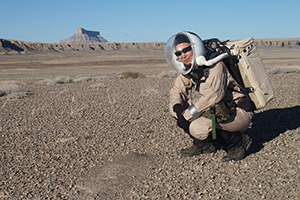
Mars Adventure
Two-week Simulation Spurs Imagination of Students, Lecturer
Diane Turnshek, a physics lab technician, lecturer and writer, never imagined spending Christmas on Mars until last summer when she heard about the Mars Desert Research Station.
by Piper Staff
Feb 04, 2013
The Pitt News
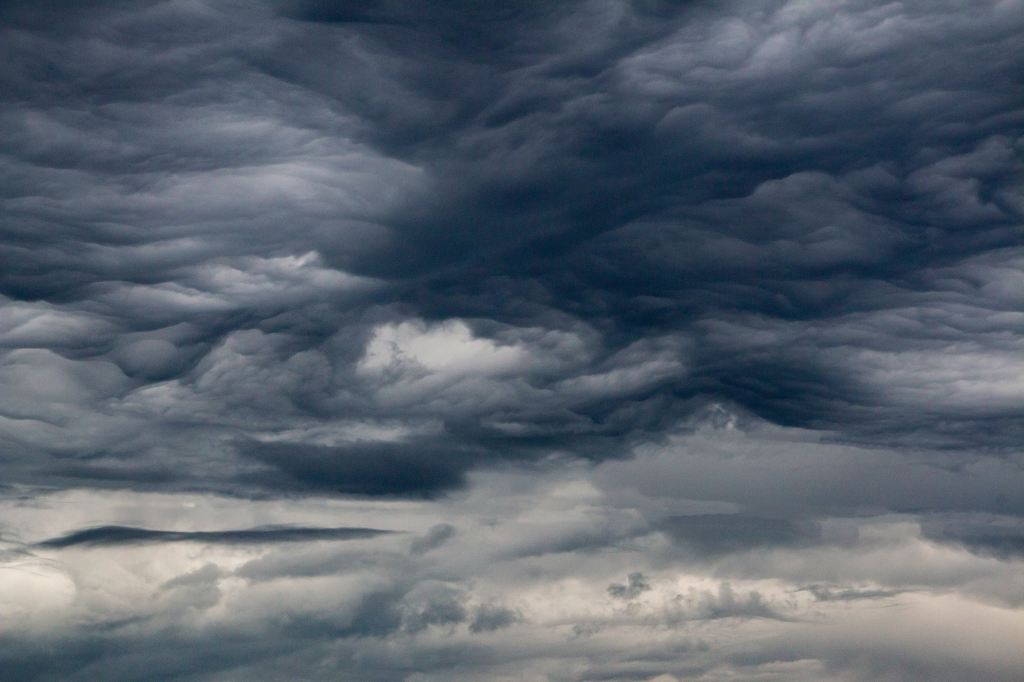
Pittsburgh prepared for star-gazing, weather isn’t.
The stars may have been shining that night. But some of the hundreds of people who visited the Allegheny Observatory on a Friday night last month couldn’t tell, because of the overcast skies.
After giving a presentation to one group of visitors, Diane Turnshek, an observer and instructor at several schools, including Pitt, fielded questions.
by KATIE LEONARD Senior Staff Writer
Nov 9, 2004
Pittsburgh Post-Gazette
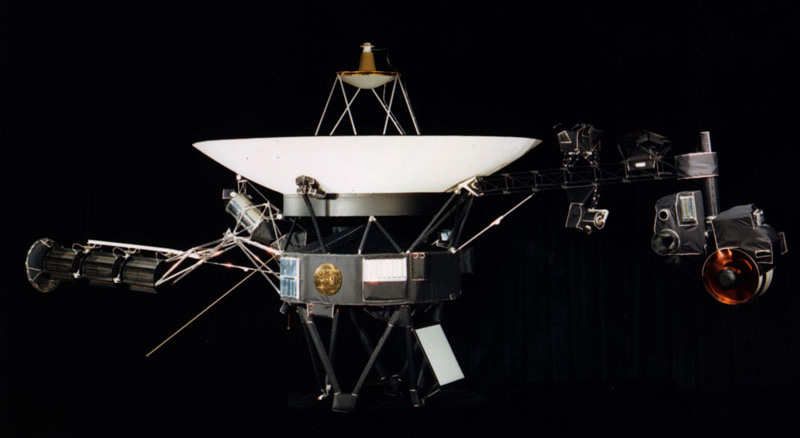
Voyager I Leaving Solar System for Interstellar Space.
Nov 11, 2012
Ms. Turnshek said Voyager 1 has turned its cameras backward for a different perspective of the solar system . . . read more
GateWorld Podcast: Wormhole Physics
JUNE 30, 2012
GateWorld Podcast: David and Diana welcome back special guest Diane Turnshek to discuss wormholes, black holes, and the universe in general.
Continue reading
GateWorld Podcast: The Science of SGU (Part 1)
July 21, 2010

Our special science expert joins Darren and David to talk about alien lifeforms, F.T.L. travel, and more!
Continue reading
GateWorld Podcast: The Science of SGU (Part 2)
FEBRUARY 7, 2011
GateWorld Podcast: Our science expert Diane Turnshek returns to talk about Destiny‘s mission, mental projections, Chloe’s transformation, and more.
Continue reading GateWorld
The Department of Physics at Carnegie Mellon University in Pittsburgh, PA is proud to sponsor 365 Days of Astronomy and its efforts to bring the world together in appreciation of our sky.
Stargate Universe and the Cosmic Microwave Background Radiation
Television shows that speculate on pure science issues are rare. Stargate Universe has that distinction with its second season focusing on the cosmic microwave background (CMB) radiation signal. An outline of both the show and the CMB lead us to speculate on the nature of science.
Listen to podcast on 365 Days of Astronomy
2011 Congressional Visits Day with the AAS
Diane was invited by the AAS to join in the fun for Congressional Visits Day in April 2011. As scientists, we need to do whatever it takes to educate the public, the politicians and their staff members about the importance of STEM education and support for science, especially when discretionary spending has been targeted in the current US budget cut. We met with NSF and NASA officials, were coached by politicians and the AAAS, and had our day on Capitol Hill talking to Staffers about Plutonium-238 domestic restart, the decadal survey and budget cuts for discretionary spending.
Listen to podcast On 365 Days of Astronomy
Astronomy Vacations
Popular spots in the world for astronomy enthusiasts are explored as vacation destinations including Stonehenge, Machu Picchu, dark sky campsites, Newgrange, Stellafane, various museums and observatories, cruises to nowhere and other solar eclipse path sites to explore.
Interesting astronomical places can be found anywhere, as demonstrated using Pittsburgh as an example. Those interested in astronomy can tour the Allegheny Observatory (University of Pittsburgh), the Buhl Digital Dome (Carnegie Science Center), the Amateur Astronomers Association of Pittsburgh’s two observatories, the Bruce and Astrid McWilliams Center for Cosmology (CMU), an optical factory and the brand new telescopes of both CCAC and St. Vincent College.
Listen to podcast on 365 Days of Astronomy
Mentoring In Astronomy
The recent hiring of two women cosmologists into the Physics Department at Carnegie Mellon University has prompted a look into mentoring for women in astronomy. The ADVANCE program (NSF solicitation 10-593) is a funding opportunity with a goal of increasing the advancement of women in the STEM fields. While it’s well-known that any mentoring program is better than no mentoring program, deciding what’s best is not always obvious. We survey of what works for different-sized departments and various astronomer ages and stages.
Listen to podcast on 365 Days of Astronomy
Discovery of Neptune’s Thirteen Moons, Part 1
Happy birthday to Neptune! This week marks the completion of one orbit around the Sun since Neptune was discovered 165 years ago. I claim that the pattern of discovery of Neptune’s moons illustrates how the process of science itself has changed, from one man, working alone, to hundreds of researchers working together on satellite mission teams. In Part I, we look at the past and how each of the thirteen moons of Neptune was discovered and in Part II (July 18), we look to the future at how the fourteenth and beyond will be found.
Listen to podcast on 365 Days of Astronomy
Discovery of Neptune’s Thirteen Moons, Part 2
Neptune has now completed one orbit around the Sun since its discovery 165 years ago. In that time, the pattern of discovery of Neptune’s moons serves to illustrate how the process of science itself has changed, from one man, working alone, to hundreds of researchers working together on satellite mission teams. In Part I (July 15), we looked at the past and how each of the thirteen moons of Neptune was discovered and in Part II (July 18), we look to the future at how the fourteenth and beyond will be found. Many people wish to experience firsthand the excitement of scientific inquiry and scientists have learned to share—by using citizen science. We discuss a new Hubble archival data project that, with the help of skilled volunteers in the Zooniverse, may turn up additional satellites in our solar system.
Listen to podcast on 365 Days of Astronomy
Wonders from Class Part 1
Just the good bits of astronomy class, Part 1.
Listen to podcast on 365 Days of Astronomy
Wonders from Class Part 2
Just the good bits of astronomy class, Part 2.
Listen to podcast on 365 Days of Astronomy
Wonders from Class Part 3
Just the good bits of astronomy class, Part 3.
Listen to podcast on 365 Days of Astronomy
Wonders from Class Part 4 Labs
Just the good bits of astronomy class.
Listen to podcast on 365 Days of Astronomy
An Account of Truman Kohman’s Life and Love of Astronomy, 1916-2010
Truman Kohman, an astronomer from Pittsburgh (CMU) who died in 2010.
Listen to podcast on 365 Days of Astronomy
CMU Physics Concepts Program: Decades-long Outreach to Middle Schools
Wonder why the sky is blue? Why reflection nebula give off blue light? Blue light scatters more easily than red light. This year, one middle school student is experimenting on the concept of scattering through the CMU Concepts program, which is designed to provide mentoring and equipment for students participating in the Pennsylvania Junior Academy of Sciences. We’ll outline the procedure and outcomes of a successful astronomy science fair project that anyone can do.
Listen to podcast on 365 Days of Astronomy
Interview with Dr. Michael Wood-Vasey, Spokesperson for the Sloan Digital Sky Survey III
The Sloan Digital Sky Surveys I and II found the distances to millions of galaxies and quasars and mapped hundreds of millions of objects (one quarter of the whole sky in five different colors). SDSS III is collecting and releasing data now (2008 to 2014). Four surveys will each have a different scientific impact. By analyzing SDSS III data, we hope to learn about extrasolar planetary systems, the structure of the Milky Way Galaxy, quasar and galaxy evolution and the nature of dark energy.
Listen to podcast on 365 Days of Astronomy
Mars Desert Research Station
The Mars Desert Research Station, in the barren canyonlands of Utah, is a cylindrical, two-story habitat where six-person crews live in a simulated Mars environment for two week rotations. This research facility is designed for scientists to study how people could someday live on Mars. It was built in the early 2000’s by the Mars Society. Crew 120 consists of a pilot, an astronomer, a physicist, a geologist, an engineer and a social entrepreneur working at the UN. The Musk Observatory houses a Celestron 14-inch CGE 1400 telescope with a CCD camera. Join us on a walk-though of the Hab, the greenhouse and the observatory and ride with us on an ATV adventure into the red hills of analog Mars.
Listen to podcast on 365 Days of Astronomy

 Diane Turnshek